
Six months ago my book, Tree Hunting, was published. It all kicked off a few days before the official publication date when I woke up at 5:00am in a Salford hotel room. With some difficulty, I dragged myself out of bed ready for an early morning appearance on BBC Breakfast.
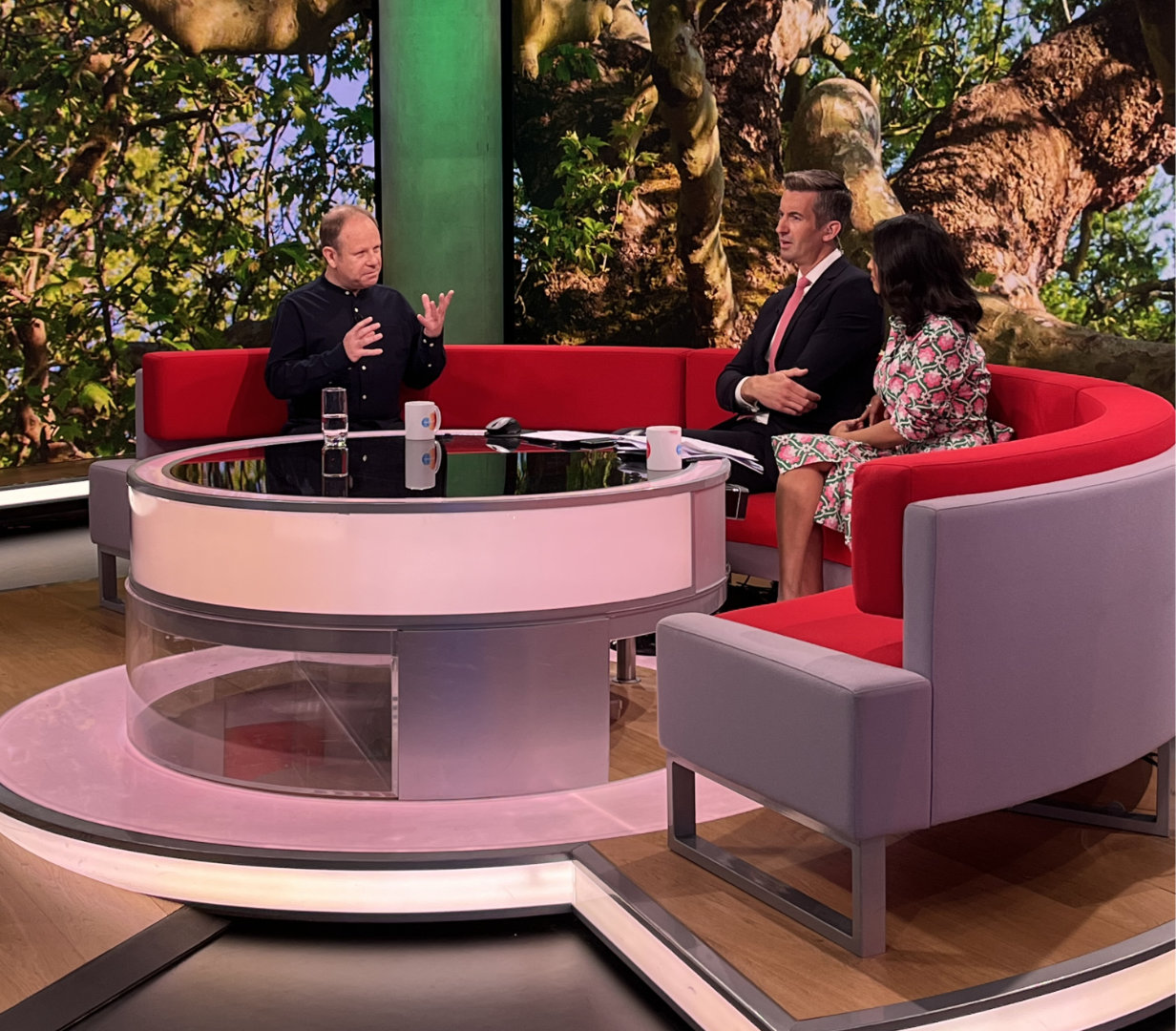
It was a strange experience, quite apart from finding myself in an unfamiliar place at an equally unfamiliar hour, I had to enthuse, still half asleep, on the scarlet sofa in a dazzlingly lit TV studio about my very soon-to-be-published book. Remarkably, it seemed to do the trick, viewers were intrigued and Tree Hunting rapidly climbed up the sales charts.
For the next couple of weeks I was in and out of studios talking about particular trees in places like Cardiff, Glasgow, Northampton, Sheffield and Coventry. But the most memorable media appearance was when I was a guest on Cerys Matthews’ Sunday morning 6Music show. The producer asked if there were any tracks I could suggest they play. So I sent off a list. I was bowled over when they selected two of my choices: Joni Mitchell’s Big Yellow Taxi (with the famous reference to the tree museum), and Supernature by 70s Euro disco supremo, Cerrone. If your interest is piqued, I have put together three playlists featuring these and many more tracks that kept me company during my Tree Hunting travels. Listen, and read more about them here.

Since my short-lived media career – a lot of fun, but alas, so far no spin-off series about great British and Irish trees – I have been touring the country promoting Tree Hunting at events large and small, from the sprawling Wilderness Festival in Oxfordshire to the tiniest bookshop in the Scottish Highlands. My last event of the year is in Plymouth on 3 December, if you’re in south Devon, do come along and say hi.
I was invited to Plymouth by a brilliant community group, Plymouth Tree People, who, as well as putting on the forthcoming Tree Hunting talk, are doing great work planting trees and advocating for the implementation of more far-sighted tree policies in the city. There are dozens of similar groups right across the UK and Ireland who care passionately about their local trees, and I feel very privileged to have met some of them. In fact, I doubt Tree Hunting could ever have been completed without the help of these groups and people linked to them.

Many readers have been in touch to tell me of their own Tree Hunting adventures. This has been amazing. I’m humbled by the number of people who have posted their finds on social media, or sent me emails telling me of their discoveries. I have been revisiting the trees whenever I can. On my travels this summer, I was able to visit dozens across England and Scotland. I have also been made aware of many trees that I didn’t include. I am keeping a record of these and considering how I can put them out there in the future, one or two have already made an appearance on my weekly Substack. Please keep them coming!

In the introduction to Tree Hunting, I predicted that from the moment of publication, the book would be out of date. Inevitably, some of the featured trees, often old and all too frequently unprotected, would succumb, perhaps to weather, climate or human activity. This has proved to be correct. One of the most shocking examples was when I discovered a tree in Birkenhead Park, which I had called ‘Paxton’s Perfect Park Tree’ in the book, had snapped. It was a stout oak, in fine health, and a youngster at less than 200 years old. I have no idea what caused the disaster, but it must have been a forceful event.

I have had other reports of trees going missing or being badly damaged by the increasingly violent storms we experience. I have also been told of one or two erroneous locations, and have been alerted to an occasional identification update. As is the way of plant taxonomy, genus and species names change as science and scholarship progresses, and so several botanical names have also evolved. I have therefore decided to keep a public record of all the 1,000 trees that feature in Tree Hunting. I will include notes about any damage, losses or changes to their taxonomy and I will update their identification or location details as I become aware of them.

In addition to the Tree Hunting Register, one reader, Richard Harrison, has very kindly produced a Google map showing the location of every single tree from the book. I have shared it below, and I hope it proves useful to many future tree hunters.

My intention with writing Tree Hunting was to provide readers with a new way, through trees, to look at and appreciate our towns and cities. It is also a record of public trees that should be valued for their presence, age, rarity, beauty or because they have a story to tell. As Jack Watkins, a kind reviewer of Tree Hunting wrote in Country Life, “…if the Government finally gets around to introducing legislation to list heritage trees, the groundwork for the first ones to be assessed has been laid with these examples”.
A book is fixed at the point of its printing, and only when it is reprinted can any (limited) changes be made. Of course, these limitations do not apply online, where a book can be given an afterlife. So, with this in mind, I would very much like to keep Tree Hunting alive. Please keep posting your trees, let me know of any identification or location tweaks, and please let me know if a tree has been lost or damaged.
You can contact me through a form here, you can view the Tree Hunting Register here, and you can explore the Tree Hunting Map here. Or simply leave a comment below.
If you would like to get hold of a copy of Tree Hunting, you can buy it at independent bookshops, Waterstones, online at the usual places, and through my own Bookshop.org shop.

This book’s life has only just begun and I look forward to the coming months and years as Tree Hunting, like the trees it catalogues, matures. I hope it remains relevant.